

The Enterprise 5.0 Blueprint
November 2026 Issue
In the News
Can Enterprise Returns Keep Up With AI Spending? Anik Bose on Schwab Network
Billions are pouring into AI infrastructure, and the revenue numbers look strong. But a lot of that revenue moves between companies that are investors, suppliers, and customers all at once. On Schwab Network’s Market on Close, An lays out what really has to happen for the buildout to hold up: enterprises have to earn a return on the AI they’re paying for. He walks through the one metric he watches (cost per successfully completed workflow), why model companies with fixed compute commitments are most exposed, and how pressure could travel to chipmakers, cloud providers, and valuations if demand falls short.

Announcements
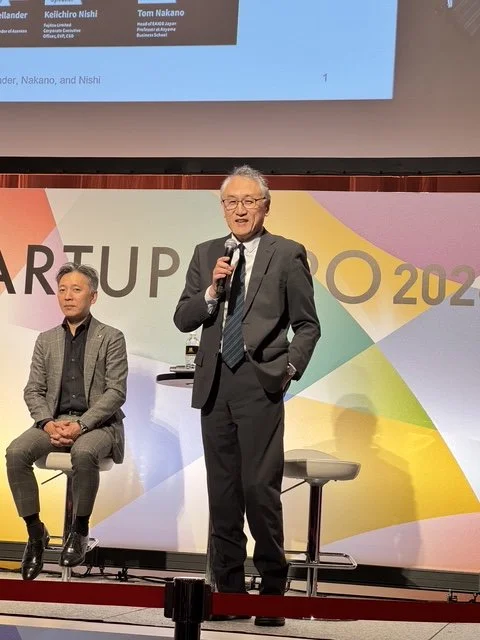
EAIGG Launches in Japan: Engineering Trust, AI Sovereignty and Intelligent Kaizen
EAIGG is now in Japan. Led by Professor Tom Nakano of Aoyama Business School, the new program kicked off at the Global Startup EXPO in Osaka with Anik Bose, Anna Felländer and Fujitsu VP Nishi on engineering trust in AI, plus a fireside chat with Barak Ben-Avinoam of the Israel Innovation Authority on what AI sovereignty looks like through trusted partnerships. From there, the team ran an AI-native workshop with SMBC and JRI on redesigning financial workflows and measuring Return on Intelligence. The thread tying it all together is Intelligent Kaizen, which applies Japan’s tradition of continuous improvement to how enterprises learn and operate with AI agents.
Featured Articles
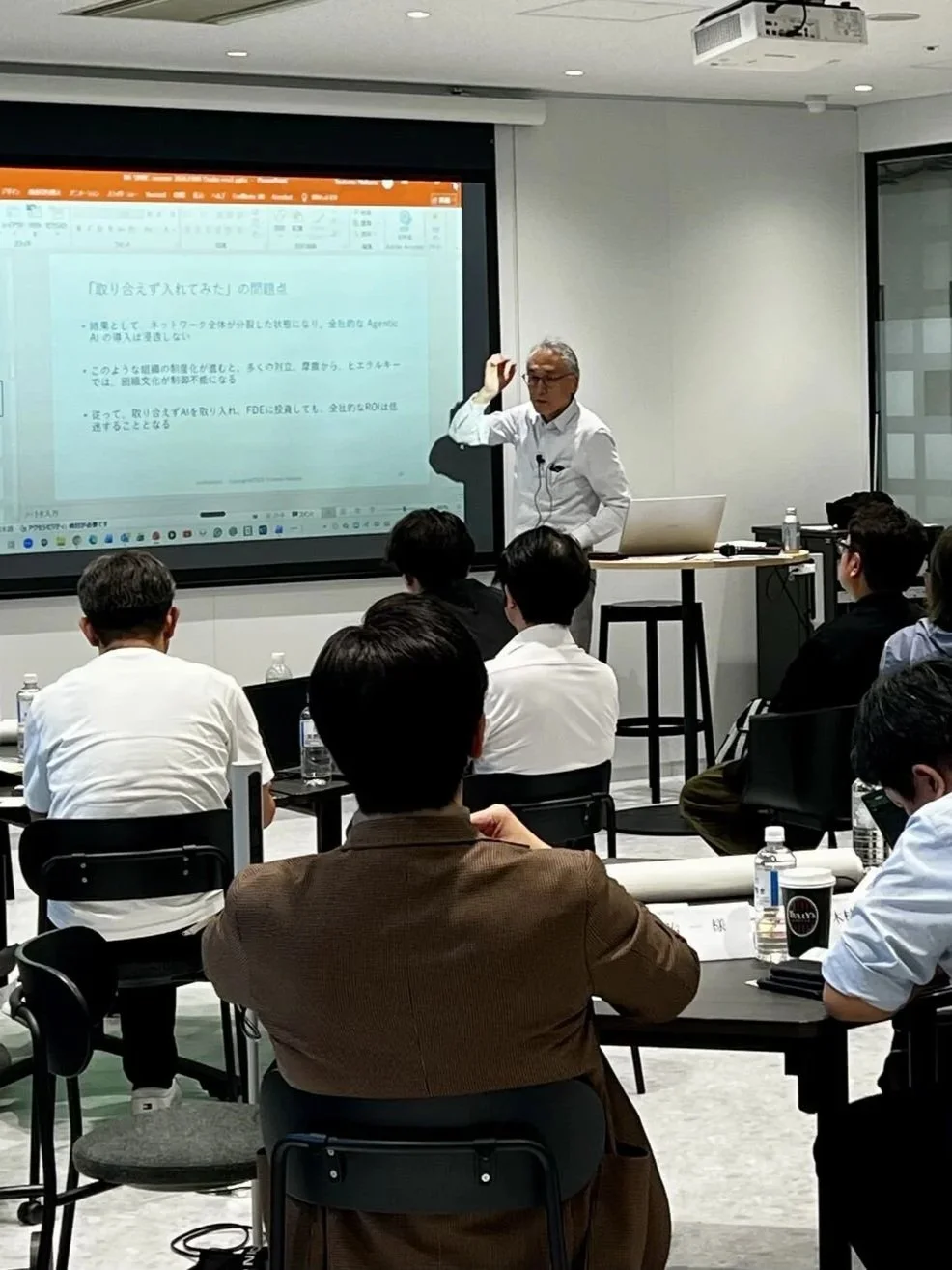
Intelligent Kaizen: How Kansai Executives Are Building the AI Native Enterprise
Anik Bose and Tom Nakano led a workshop with SMBC, JRI and 15 Kansai executives on turning AI into economic value while keeping humans accountable. The group proposed measuring Return on Intelligence through revenue, margins, cycle times and quality, and made the case that Japan’s commitment to quality positions it to extend continuous improvement into continuous enterprise learning.
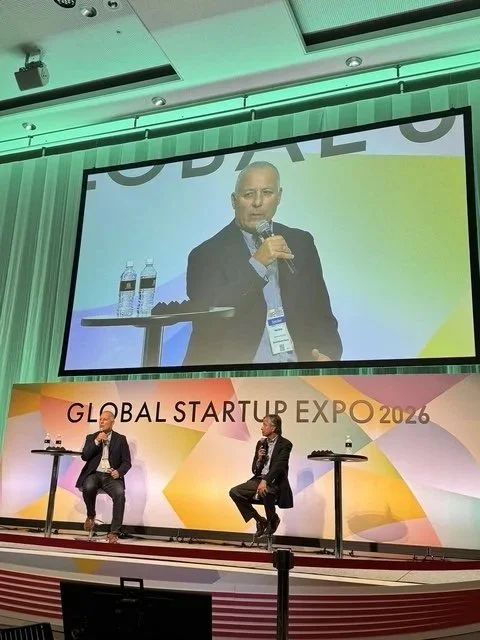
AI Sovereignty: Lessons from Israel for Japan
At the Global Startup Expo in Osaka, Anik Bose and Barak Ben Avinoam unpacked how Israel’s Yozma program turned $100 million in public funding into a thriving venture ecosystem, and what Japan can borrow from it: selective control over sensitive data, inference and cybersecurity, paired with trusted global partners. The open question: is allied AI sovereignty stronger than going it alone?
Member Spotlight
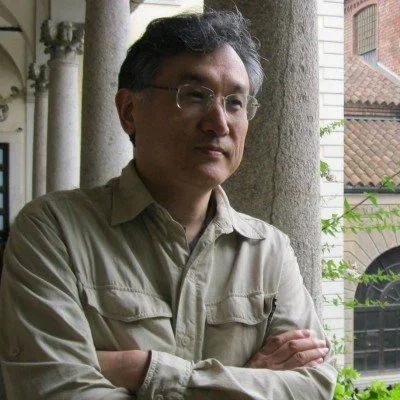
Tsutomu (Tom) Nakano
Head of EAIGG Japan and a Professor at Aoyama Business School
Tsutomu (Tom) Nakano is Head of EAIGG Japan and a Professor at Aoyama Business School, part of the Graduate School of International Management at Aoyama Gakuin University in Tokyo, where he teaches in the MBA program. His research focuses on organizational networks, corporate strategy, entrepreneurship and Japanese management, with a particular interest in how companies learn, adapt and innovate through the relationships inside and around them. He is the author of A Paradox of Embeddedness: Social Network Analysis of a Japanese Industrial District and Social Networks and Organizational Dynamics, and editor of Japanese Management in Evolution: New Directions, Breaks, and Emerging Practices (Routledge). At EAIGG he leads the Japan program, connecting Japanese executives with the global AI-native ecosystem and championing “Intelligent Kaizen,” an approach that extends Japan’s tradition of continuous improvement into continuous enterprise learning with AI.

Country Spotlight
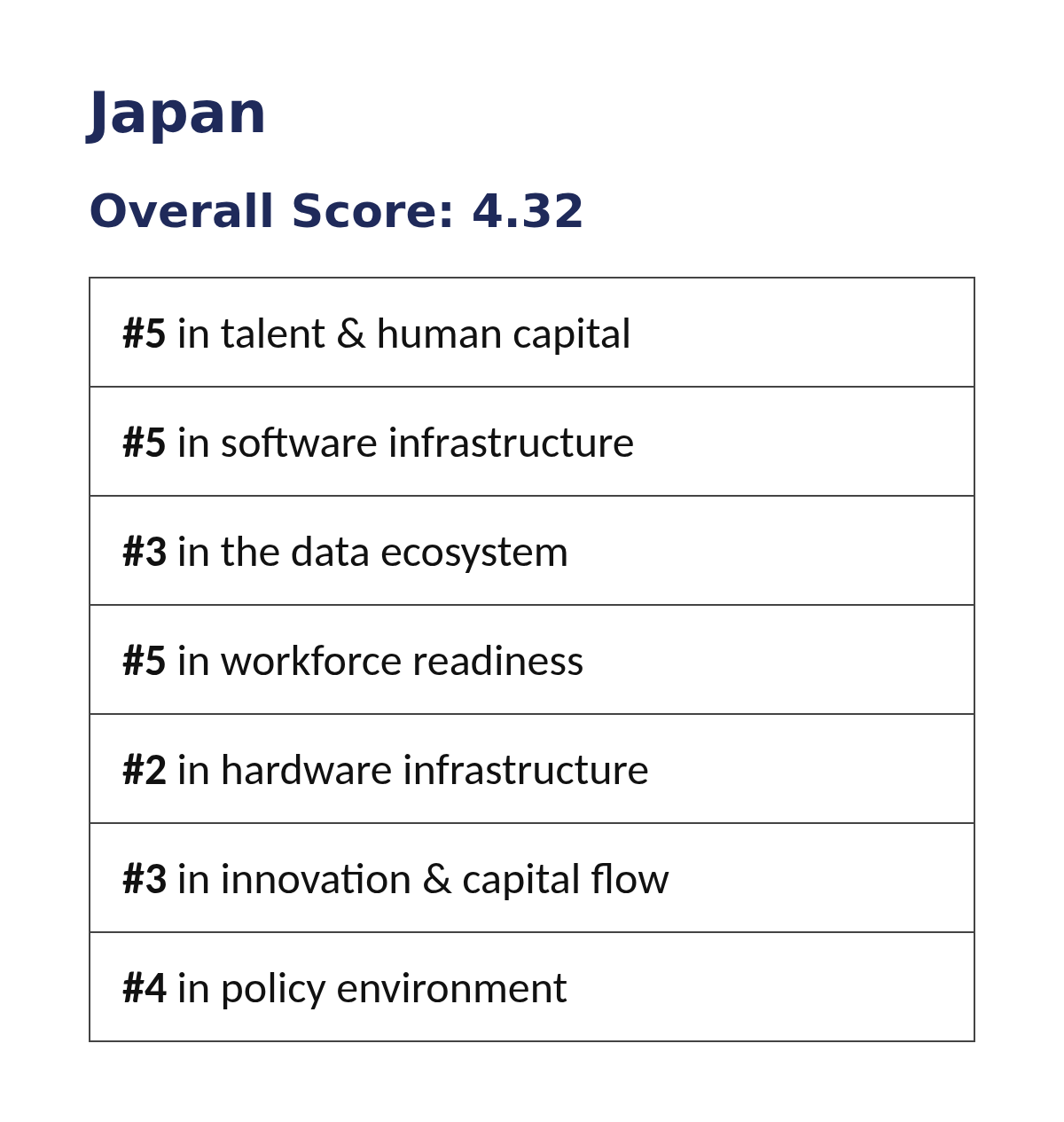
Japan: Built for Industrial AI
Japan's AI ecosystem combines strong industrial infrastructure, hardware capability, enterprise operational environments, and advanced manufacturing systems.
The country performs particularly well in hardware infrastructure, industrial systems integration, robotics ecosystems, semiconductor capability, and enterprise operational maturity. Japan also benefits from strong institutional trust, advanced manufacturing infrastructure, and highly developed enterprise environments that can integrate AI into industrial workflows.
Japan's semiconductor ecosystem remains an important part of the global supply chain for AI-related hardware. While companies in other regions design many advanced AI chips, Japanese companies play a critical role in semiconductor materials, manufacturing equipment, and fabrication technologies that support global chip production.
Japan's ecosystem also reflects a broader strategic advantage often underrepresented in conventional AI rankings: the ability to integrate AI into complex physical and industrial systems at scale.
Featured Events
SUPERRETURN SAUDI ARABIA
25-26 January 2027 | SAUDI ARABIA
EAIGG is partnering with SuperReturn Saudi Arabia! SuperReturn Saudi Arabia is the GCC’s most powerful gathering, bringing together the most senior private capital players from Saudi Arabia, the GCC and around the world.
Get 10% off your ticket using the link below and code: FKR3738EAIGG
OSAKA GLOBAL EXPO
OCTOBER 5-7, 2026
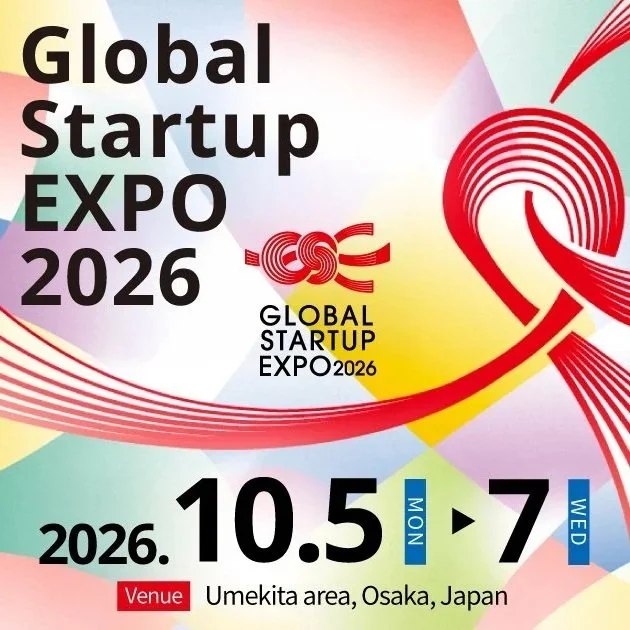

This week, Osaka hosts one of Asia's largest
deep-tech startup events, bringing together startups, investors, corporations, and government on themes including AI, advanced robotics, and semiconductors. It's the backdrop for the next phase of EAIGG's work in Japan.
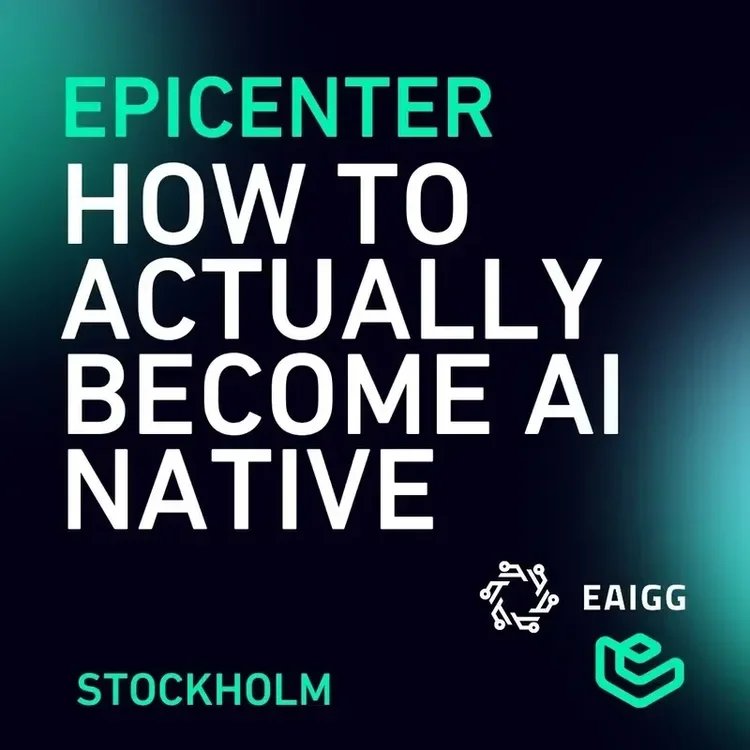
NORDIC EXECUTIVE
"LUNCH 'N LISTEN"
OCTOBER 12, 2026 | STOCKHOLM
This week, Osaka hosts one of Asia's largest
deep-tech startup events, bringing together startups, investors, corporations, and government on themes including AI, advanced robotics, and semiconductors. It's the backdrop for the next phase of EAIGG's work in Japan.